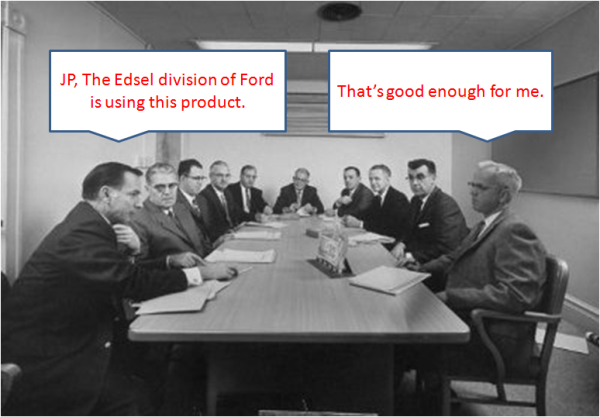
In the sales trade, a salesperson who “shows up and throws up” pushes his agenda at customers with no concern for their needs or pain points. His canned presentation is only about his products and bores customers to tears.
Better salespeople realize that selling is about motivating customers, which rarely happens by just dumping product information on them. These salespeople work to understand the customer’s point of view and to put their product into the context of their customers world. Before talking product they might ask questions to find out...
• What are the problems or pain points unique to the customer?
• How does this customer fit into his or her competitive market?
• Are there technical, regulatory, or financial trends that will affect their needs?
• Which applications or best practices might affect this company's purchasing decisions?
Better salespeople focus on solving customer problems first, product information follows. They collect information and advice helpful to the customer not just with a purchase, but in using the product successfully.
Now, let’s get back to your website. Which of these two approaches describe the content on it? Is your content just about your company and products, or do you also have information helpful to solving customer problems?
Today, with 70% of the customer product evaluation occurring online, before company salespeople are contacted, simply showing your products is not enough. Smart companies are using their websites as the core part of a digital salesforce. The content on a website does more that show product information, it starts to sell the products as well.
There are two kinds of content needed:
First, problem solving content to draw potential customers to the site. This content:
• Helps customers feel like you are committed to their success. Don’t you think this is more meaningful than just telling your customers how committed you are?
• Motivate registration (for a newsletter or webinar etc.) and capture early stage sales leads.
• Helps customers become familiar with your website before they make a purchase. Wouldn’t it be better if they were familiar with your website before they head into their next product purchase?
In a recent blog post, Junta 42 founder Joe Pulizzi shared a great example of this this on the Monster.com website. Pulizzi noted that the needs of Monster's customers, as they look for jobs in the recession, were addressed directly on the site:
"Let's take a look at challenges faced by those people looking for or trying to keep their job:
What jobs will be readily available with the passage of the stimulus bill?
If I'm downsized, what do I need to do now to protect my career?
How much am I worth in a downturn?
How do I protect my job in a tough economy?
Can I still get a raise in a recession?
Those five questions that employees are struggling with are actually the first five articles on the Monster.com site."
Sure, Monster.com provides a job search service, but the content on the site does not hype their service, instead it services the customers.
Second a site should demonstrate the unique value of the products. Today's web savvy buyers use early website visits to narrow down a list of potential buyers to a short list. The content on your website needs to fight for your products to be on that short list.
What content is on your website? Hopefully, a balance of product and company information, combined with content that helps your customers solve problems and understand the unique value your products offer. If the content is just all about your products they may not make to the short list.
As you redesign your website it is important to focus on products but also include information that motivate potential customers to buy them from you and not elsewhere.
Read about our content development services
Someone at Google is mad. Clearly they are tired of being gamed. Their job is to find and prioritize the best content on the web for their users. Their job is NOT to find, and prioritize the best optimized content for users. Google wins when it delivers the best content.
But it is no secret that OK content deployed with sophisticated SEO tactics can get higher Google rankings than better content without them. Google is out to change this. Last year the Panda series of algorithm changes lowered the rankings of websites that aggressively repurposed content or utilized content farms to win higher ratings.
This year, Google is at it again, this time introducing the Penguin algorithm adjustments which will lower the rankings of sites using so called “black hat” or aggressive SEO techniques.
Google’s "webmaster central blog" explains:
"In the pursuit of higher rankings or traffic, a few sites use techniques that don't benefit users, or the intent is to look for shortcuts or loopholes that would rank pages higher than they deserve to be ranked. The goal of many of our ranking changes is to help searchers find sites that provide a greater user experience and fulfill their information needs. We also want the 'good guys' making great sites for users, not just algorithms, to see their effort rewarded."
Google still welcomes basic SEO techniques like posting key words, but websites that use agressive techniques may find their rankings reduced. It's tough to outsmart Google. But the sure fire way to keep on Google's best side is to simply spend less on advanced SEO techniques and more on content. That will keep Google and the penguins happy.
Read the post on the official Google Webmaster Central blog
Download our study which covers which marketing content is most persuasive